
Canadian Bank Accounts 2025: Registered vs Non-Registered, Types & How to Choose
Published on June 16, 2025 | By WealthFusions Finance Team
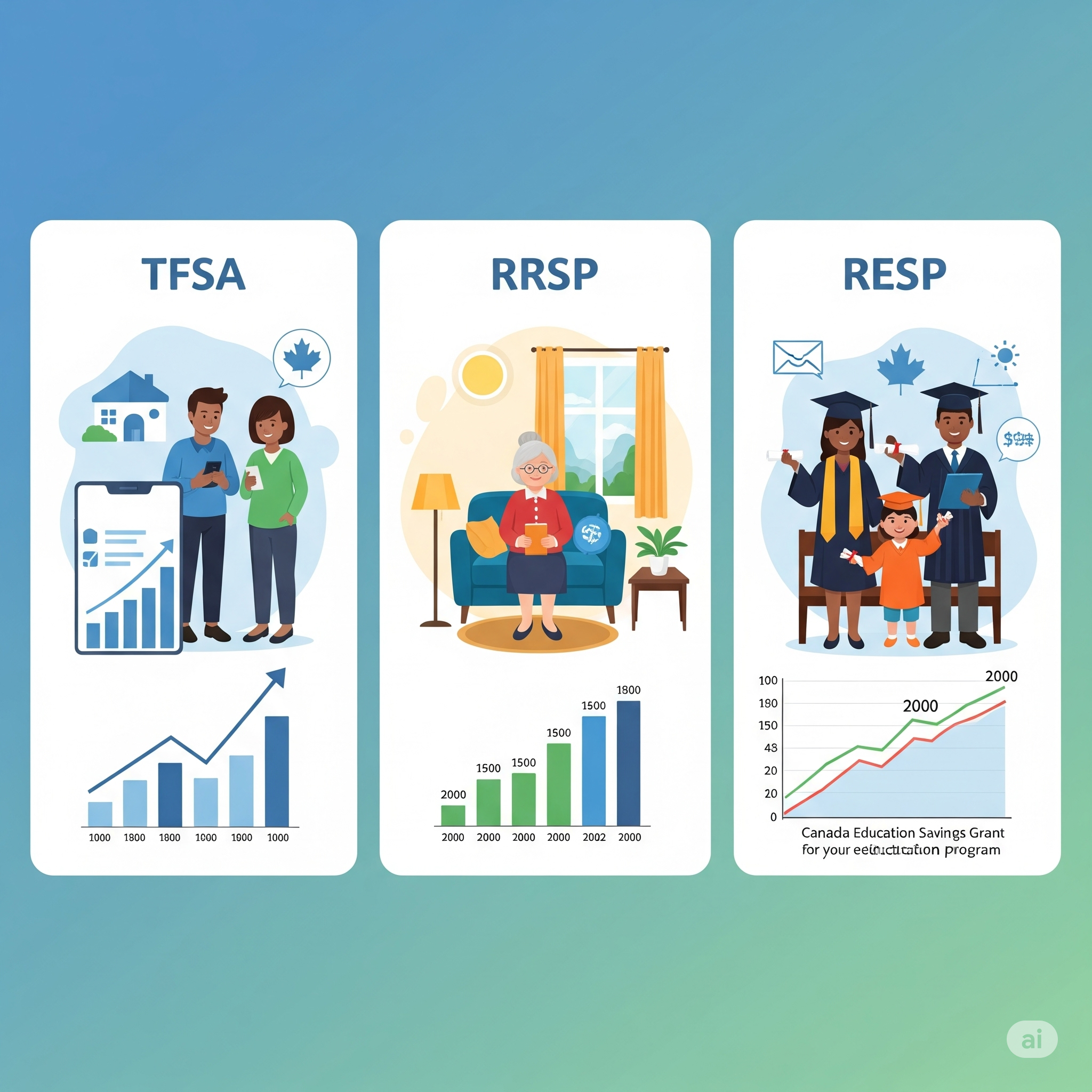
Whether you’re managing daily expenses, saving for a rainy day, or planning for retirement, understanding your options for Canadian bank accounts is essential. Canada offers a wide variety of registered and non-registered accounts, each tailored to specific financial goals. In this guide, we’ll break down everything you need to know to choose the right type of bank account.
What Are Non-Registered Bank Accounts?
Non-registered accounts are standard financial products that do not come with tax advantages. They are commonly used for daily transactions or general-purpose saving. These accounts are not reported to the Canada Revenue Agency (CRA) for tax-deferral or tax-free purposes, which means you pay taxes on any interest income earned.
1. Chequing Accounts
Chequing accounts are essential for everyday banking in Canada. They allow you to deposit and withdraw money, pay bills, make Interac e‑Transfers, and use a debit card for in-person or online purchases. Most Canadian banks offer tiered chequing plans based on monthly activity.
- Monthly fees: Range from $0 to $30 depending on the account level
- Perks: Unlimited transactions, overdraft protection, mobile cheque deposit
- e‑Transfers: Free with many digital banks; some charge $0.50–$1.50
2. Savings Accounts
Savings accounts are designed for storing money while earning interest. They may be used for emergency funds, travel savings, or any short-term goal. Interest earned is taxable if the account is not registered.
- Interest rates: 0.50%–4.50% APY depending on the institution
- Fees: Typically no monthly fees but limited free withdrawals
- Access: Online, mobile, ATM
3. Joint Accounts
Joint accounts allow multiple people—such as spouses or family members—to share access to the same account. These are ideal for shared household expenses, joint savings goals, or caregiving arrangements.
4. Business Accounts
These accounts are tailored for small business owners, freelancers, and corporations to manage business income and expenses separately from personal finances.
Registered Bank Accounts in Canada
Registered accounts are special tax-advantaged accounts recognized by the CRA. They are designed to help Canadians save for specific purposes like retirement, education, homeownership, or disability support. Contributions, earnings, and withdrawals are regulated differently from non-registered accounts.
1. Tax-Free Savings Account (TFSA)
The TFSA is one of the most flexible and popular registered accounts in Canada. Contributions are made with after-tax dollars, but any interest, dividends, or capital gains earned are completely tax-free—even when withdrawn.
- Annual limit (2025): $7,000
- Total limit: Over $95,000 (if eligible since 2009)
- Withdrawals: Tax-free, and room is restored the following year
2. Registered Retirement Savings Plan (RRSP)
The RRSP helps you save for retirement by allowing contributions to reduce your taxable income. Investments grow tax-deferred until withdrawal, usually during retirement when your income may be lower.
- Annual limit (2025): 18% of previous year’s income, up to $31,560
- Tax treatment: Contributions are deductible; withdrawals are taxable
- Special uses: Home Buyers’ Plan (HBP), Lifelong Learning Plan (LLP)
3. Registered Education Savings Plan (RESP)
RESPs help parents and guardians save for a child’s post-secondary education. Contributions are not tax-deductible, but earnings grow tax-deferred and are taxed in the student’s name upon withdrawal—usually at a lower rate.
- Lifetime limit: $50,000 per beneficiary
- CESG: 20% match on the first $2,500/year (up to $500/year)
4. Registered Disability Savings Plan (RDSP)
Designed for Canadians with disabilities, the RDSP allows long-term savings with government grants and bonds available for qualifying individuals. Contributions are not tax-deductible, but growth is tax-deferred.
- Lifetime limit: $200,000
- Grants/Bonds: Up to $90,000 in lifetime support
5. First Home Savings Account (FHSA)
Introduced in 2023, the FHSA helps first-time homebuyers save up to $40,000 with both tax-deductible contributions and tax-free withdrawals for qualified home purchases.
- Annual limit: $8,000
- Lifetime limit: $40,000
Comparison Table: Registered vs Non-Registered
| Account Type | Tax Benefit | Best Use | Annual Limit |
|---|---|---|---|
| Chequing | No | Everyday spending | None |
| Savings | No | Emergency fund | None |
| TFSA | Tax-free growth | Flexible savings | $7,000 |
| RRSP | Tax-deferred | Retirement | Up to $31,560 |
| RESP | Gov’t grants | Education | $50,000 lifetime |
| RDSP | Grants + tax deferral | Disability support | $200,000 lifetime |
| FHSA | Tax-free contributions & withdrawals | First home | $8,000 |
FAQ: Canadian Bank Accounts
1. What is the difference between registered and non-registered accounts?
Registered accounts offer tax benefits and are tracked by the CRA. Non-registered accounts are standard chequing or savings accounts without tax perks.
2. Can I have both a TFSA and an RRSP?
Yes. You can contribute to both and use them for different purposes—short-term and long-term savings respectively.
3. Do I need income to open a TFSA?
No. Anyone 18 or older with a valid SIN can contribute to a TFSA regardless of income.
4. What happens if I over-contribute to a registered account?
You may face penalties. TFSA over-contributions are taxed at 1% per month. Always track your limits.
5. Are online banks in Canada safe?
Yes, as long as they are CDIC-insured and use secure encryption. Many online banks offer higher interest rates with no fees.
Conclusion
From chequing and savings accounts to TFSAs, RRSPs, and RESPs, Canadians have a broad range of account options. The right mix depends on your financial goals, lifestyle, and tax planning needs. Understanding the differences between registered and non-registered accounts is the first step toward building a smarter financial future.
visit this page? to get updated with the changing situation.