

Improving Your Credit Score in Canada: Proven Strategies for 2025
Published on June 17, 2025 | By WealthFusions Finance Team
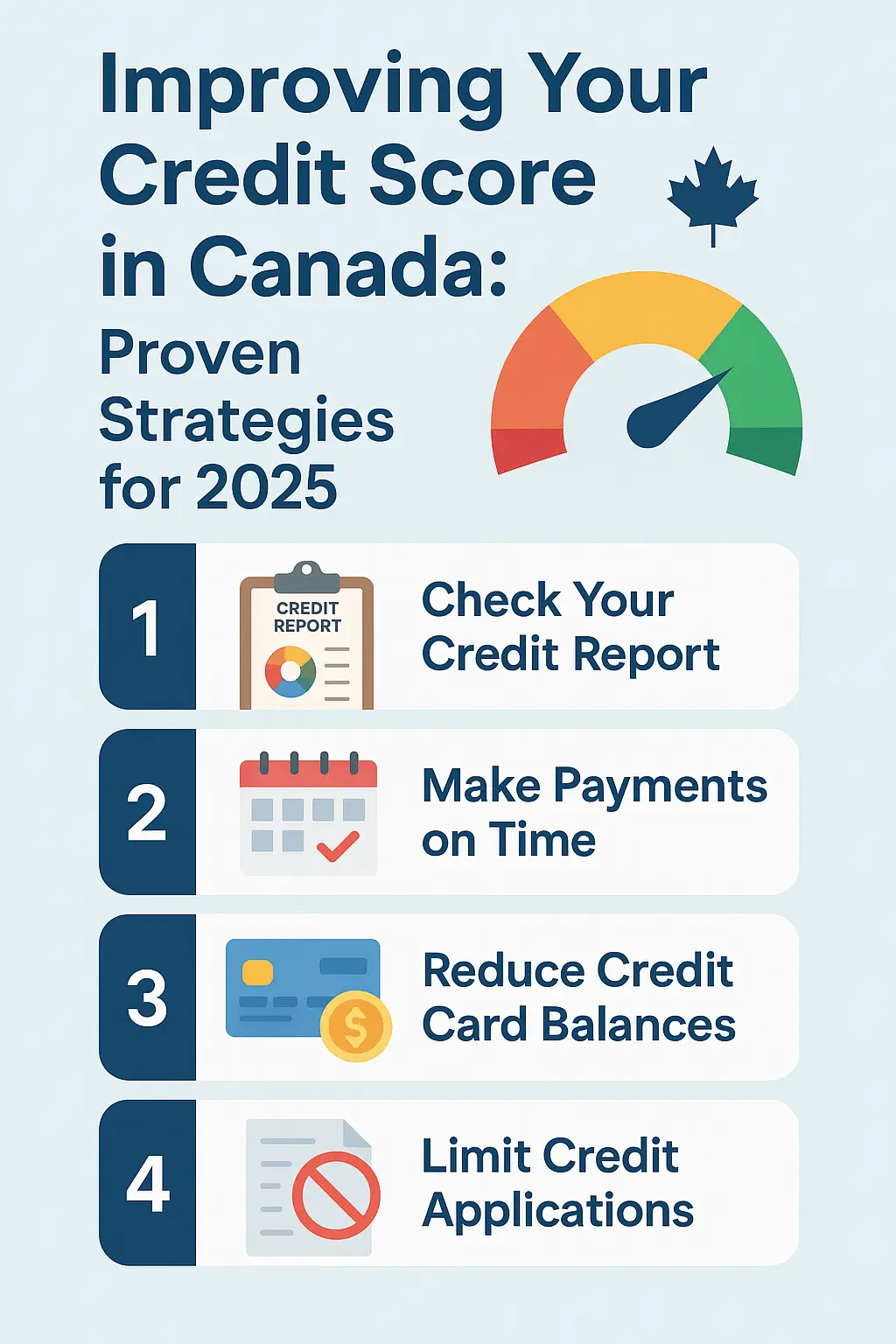
Your credit score plays a crucial role in your financial life—from qualifying for loans to securing lower interest rates. In Canada, a strong credit score (typically 650+) can save you thousands over time. This guide breaks down easy, data-backed strategies to improve your credit score quickly and sustainably. Whether you’re rebuilding after setbacks or building credit for the first time, we cover everything you need to know to boost your financial health confidently.
1. Understand What Affects Your Credit Score
Canadian credit bureaus, Equifax and TransUnion, calculate scores based on these key factors:
- Payment history (35%) — Timely payments boost your score; missed payments hurt.
- Credit utilization (30%) — Keep balances below 30% of your credit limits.
- Length of credit history (15%) — Older accounts add trustworthiness.
- New credit inquiries (10%) — Limit hard credit checks from lenders.
- Credit mix (10%) — A healthy combination of credit types (credit cards, loans) is beneficial.
2. Pay Bills on Time, Every Time
Late payments stay on your credit report for up to 6 years and can drop your score by 50-100 points. Use these methods to avoid late payments:
- Set up automatic payments or calendar reminders.
- Prioritize paying minimum balances if cash flow is tight.
- Communicate with creditors immediately if you anticipate trouble.
Example: A TransUnion study showed 68% of Canadians who improved their score over 50 points started by fixing payment punctuality.
3. Reduce Your Credit Utilization Ratio
High credit card balances relative to your limits can signal risk to lenders. Aim to keep utilization under 30%, ideally below 10% for top scores.
| Utilization Ratio | Credit Score Impact | Recommended Action |
|---|---|---|
| 0-10% | Excellent (740+) | Maintain low balances; pay in full monthly |
| 11-30% | Good (670-739) | Pay down balances; avoid new debt |
| 31-50% | Fair (580-669) | Focus on debt repayment plans |
| 50%+ | Poor (<580) | Seek credit counselling or consolidation |
4. Keep Old Accounts Open
Closing old accounts shortens your credit history, potentially lowering your score. Even if you don’t use a credit card often, keeping it open helps maintain length and available credit.
5. Limit New Credit Applications
Each hard inquiry stays on your report for 2 years and can reduce your score by 5-10 points. Apply only when necessary, and try to space applications by 6 months or more.
6. Diversify Your Credit Mix
A balanced credit profile including credit cards, installment loans, and lines of credit can improve scores. But avoid opening accounts you don’t need just for diversification.
7. Monitor Your Credit Reports Regularly
Review reports at least annually from Equifax and TransUnion to spot errors or fraud early. You can dispute inaccuracies online for free.
8. Consider Credit-Building Tools
If you’re new to credit or rebuilding, consider:
- Secured credit cards requiring a refundable deposit.
- Credit-builder loans from some credit unions.
- Authorized user status on a family member’s account with good credit.
Conclusion & Your Next Steps
Improving your credit score takes time, discipline, and smart financial habits. Start with punctual payments, reducing debt, and monitoring your reports. Small steps today can save you thousands in interest tomorrow.
Visit to get a personalized credit improvement plan tailored to your needs and goals.
Frequently Asked Questions
- 1. How long does it take to improve a credit score?
- It varies, but consistent positive behavior can improve your score within 3–6 months.
- 2. Can I improve my score if I have bad credit?
- Yes, with time, paying debts on time, and avoiding new negative marks.
- 3. Does checking my own credit report lower my score?
- No, soft inquiries like self‑checks do not affect your score.
- 4. What is a hard inquiry?
- A credit check by a lender when you apply for credit; may lower your score temporarily.
- 5. Are secured credit cards effective?
- Yes, they help build credit if payments are made on time and balances kept low.
- 6. How often can I get a free credit report?
- Equifax and TransUnion provide one free report per year online; some provinces offer more frequent access.
- 7. What happens if I have errors on my credit report?
- Dispute them immediately online with the bureau; correcting errors can boost your score.
- 8. Can paying off a loan early improve my score?
- Yes, but keep older accounts open to maintain credit history length.